close

MENU
CLOSE MENU
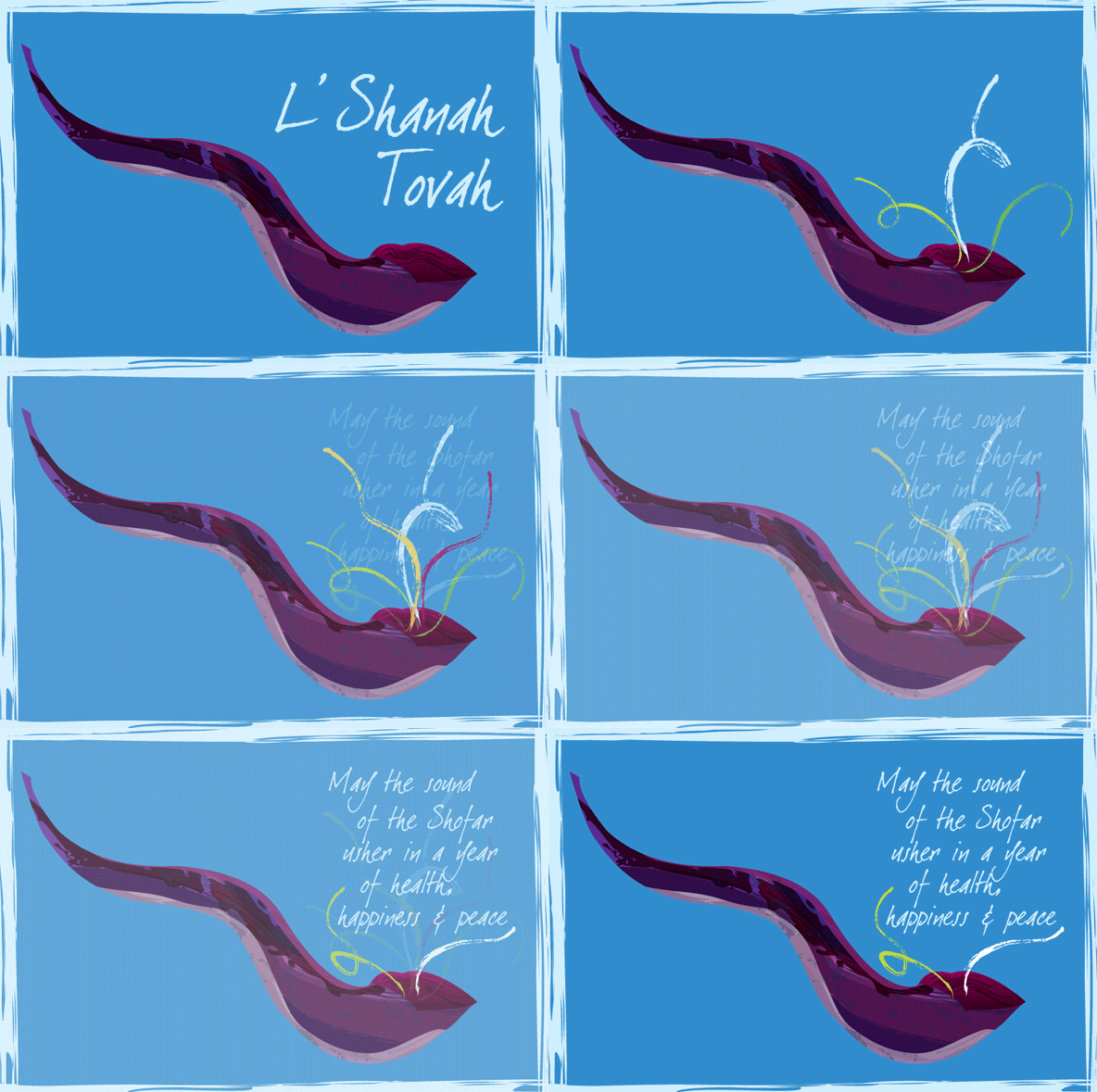
JEWISH NEW YEAR ECARDS
Usher in the New Year while at the same time supporting the work of The Jewish Foundation for the Righteous by sending a JFR eCard. Click here to schedule your eCards now! Rosh Hashanah starts Friday night, September 11, 2026.
HOW WAS IT POSSIBLE? A HOLOCAUST CURRICULUM FOR AND BY TEACHERS™ PILOTS IN PALM BEACH COUNTY
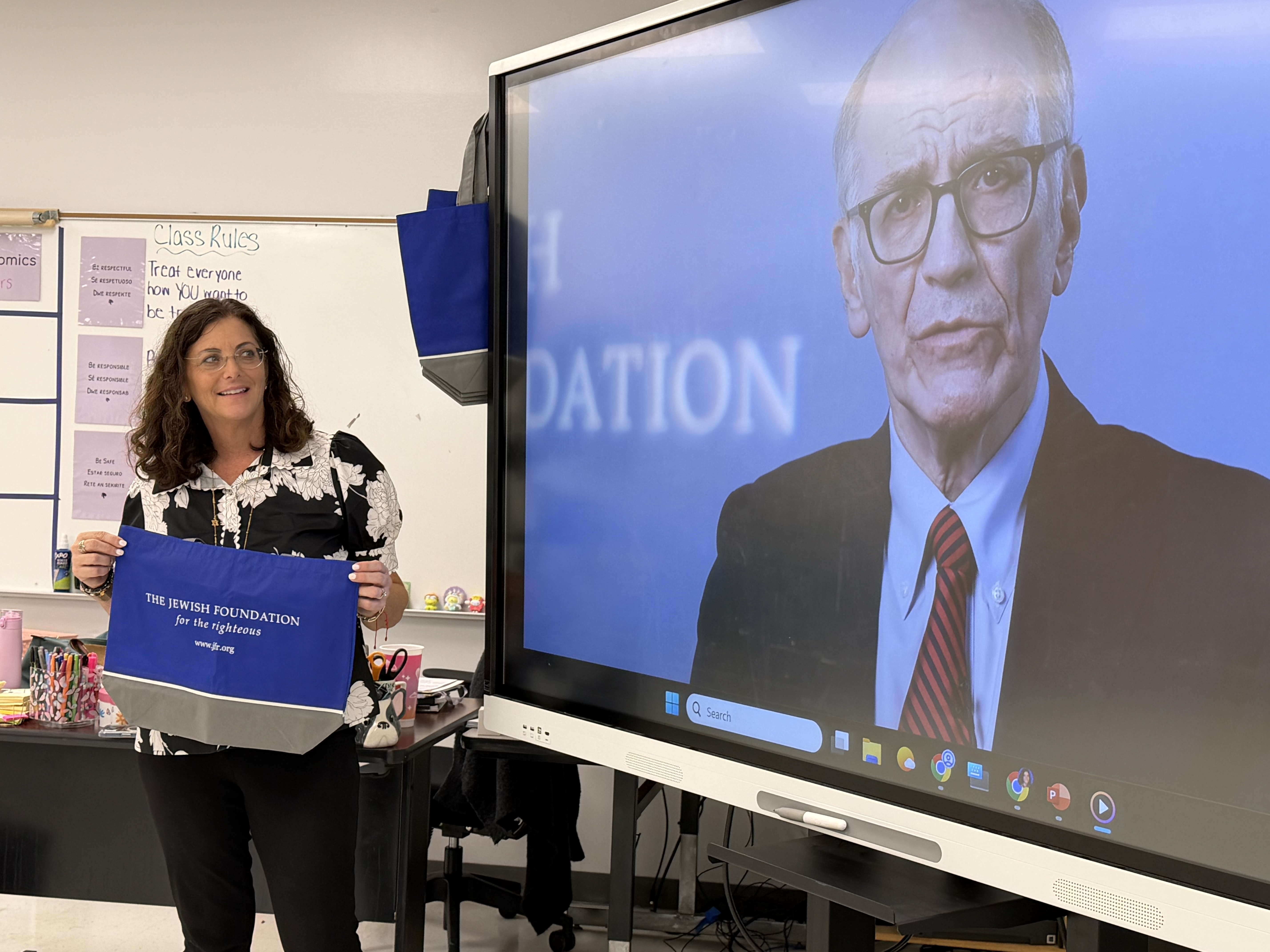
On Wednesday, August 5, 2026, Kimberly Coombs (Lerner Fellow 2022) and Stanlee Stahl presented JFR’s online program at a Symposium for Social Studies Teachers in Palm Beach County, FL. We presented at five sessions. We thank Palm Beach County School Distcrict for inviting the JFR to present at their symposium. It was great to see so many Alfred Lerner Fellows.
2027 ADVANCED SEMINAR
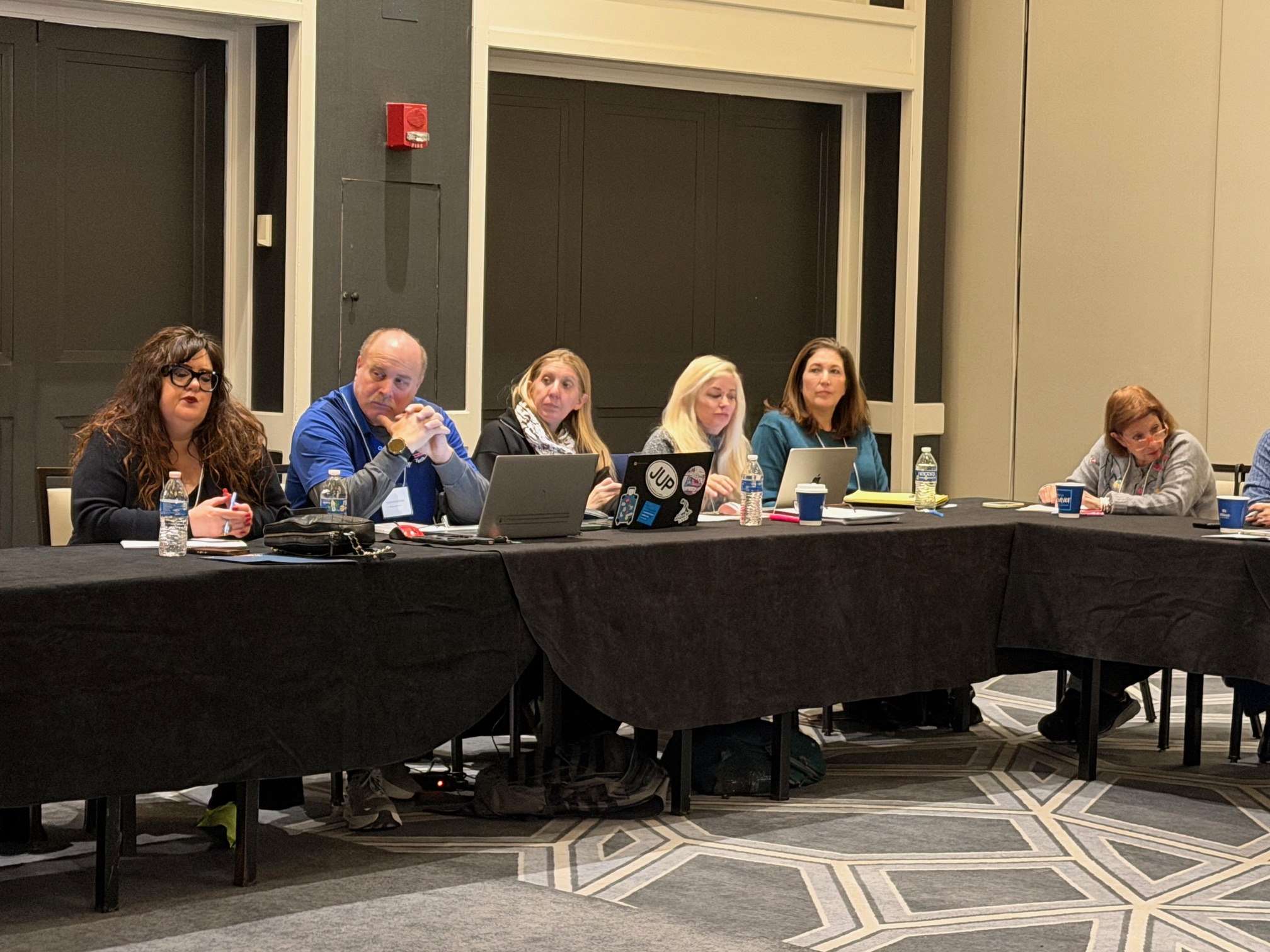
The Advanced Seminar is planned for January 16-17, 2027, and will be held at the Hilton Newark Airport. We are in the process of finalizing the program. The focus of the 2027 Advanced Seminar is the impact of AI on Holocaust education and research and Chapter 9 of How Was it Possible? A Holocaust Reader by Peter Hayes, “Afterwards". We will address Liberation, DP Camps, and the International Military Tribunal. The following scholars will be presenting, Professor John Barrett from Fordham Law School, Professor Todd Presner from UCLA, Dr. Christine Schmidt from the Weiner Holocaust Library in London, and Professor Dan Stone from Royal Holloway, University of London.
2026 EUROPEAN STUDY PROGRAM REFLECTIONS
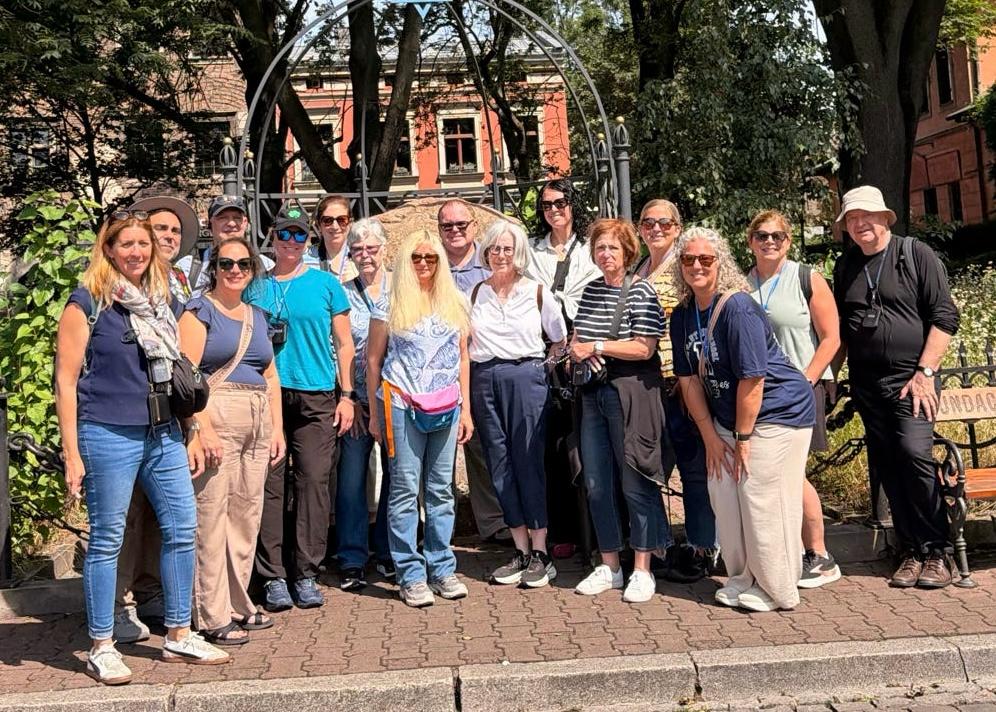
The JFR asked each Lerner Fellow who participated in the JFR’s European Study Program to write a reflection paper. I thought I would share reflections from several of the teachers participating in the Study Program.
Stacy Steele (2021 Alfred Lerner Fellow)
High School Social Studies Educator, South Carolina
South Carolina Council on the Holocaust – Nominating Center
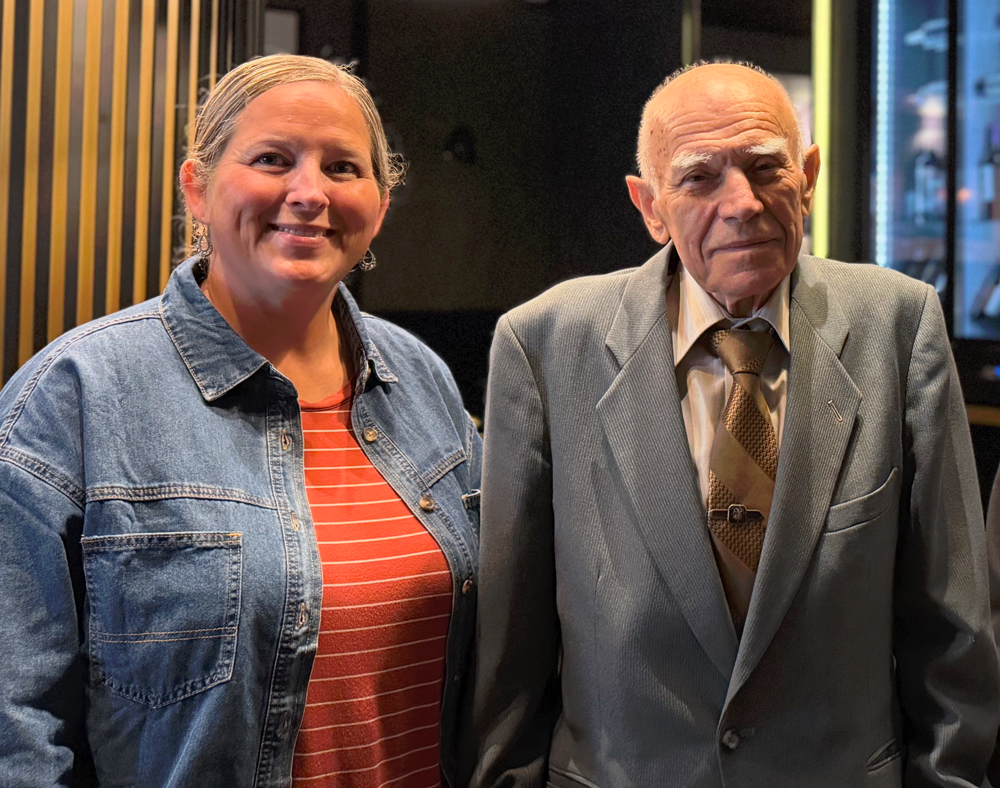
Participating in the 2026 Jewish Foundation for the Righteous European Study Program through Poland was once again an extraordinary privilege and a transformative professional experience. While last year's program strengthened my understanding of the Holocaust through sites of memory and stories of courage and rescue, this year's journey challenged me in an entirely different way. Throughout our travels in Warsaw, Tykocin, Treblinka, Chełmno, Łódź, Auschwitz-Birkenau, Oświęcim, and Kraków, I was continually encouraged to move beyond remembering what happened and instead ask how and why it happened – and how can I take this knowledge and purposefully and meaningfully incorporate it into my teaching practice…
Perhaps the greatest “gift” of this year's program was the way we were continually challenged as educators. Rather than simply presenting historical facts or focusing solely on the emotional impact of the Holocaust, Robert Jan repeatedly encouraged us to examine our own
assumptions about how we teach this history. He challenged us to "go one step back" (Robert Jan’s rule of storytelling) – to understand places as ordinary communities before knowing their tragic outcomes and to recognize that history unfolds through countless individual choices rather than inevitability. We wrestled with difficult questions about balancing survivor testimony with historical evidence, about understanding perpetrators without excusing them, and about helping students recognize the gradual progression from prejudice to persecution and ultimately genocide. These conversations pushed me intellectually and reminded me that effective Holocaust education requires not only empathy, but also historical thinking, careful analysis, and a willingness to confront complexity.”
Micaela McNiff (2025 Alfred Lerner Fellow)
Secondary Social Studies Specialist, Palm Beach County, Florida
inSIGHT Through Education – Nominating Holocaust Center
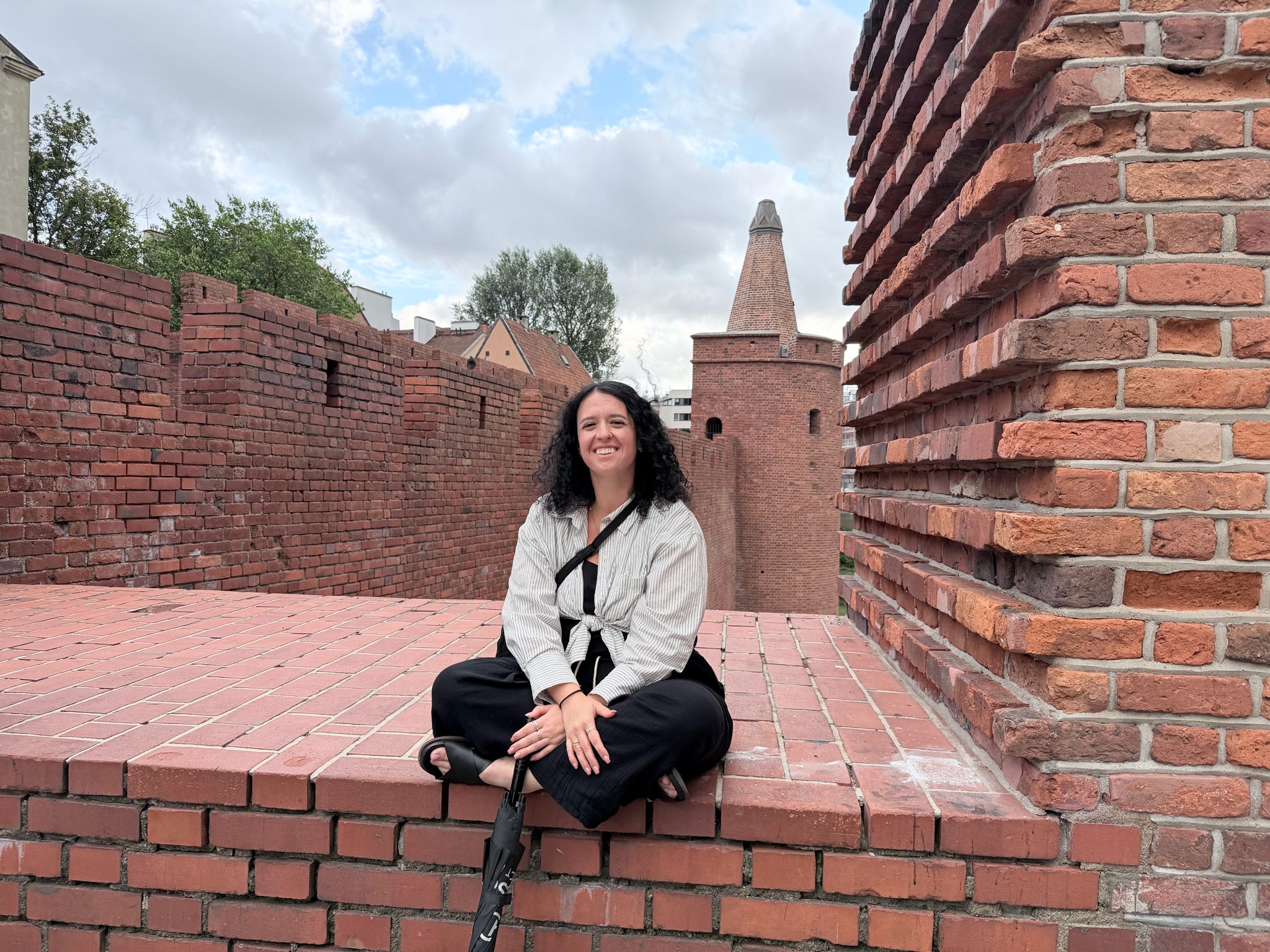
“When I applied for the JFR European Study Program, I hoped it would deepen my content knowledge and strengthen my ability to support teachers in delivering meaningful, historically accurate Holocaust instruction. It certainly accomplished both of those goals, but I left Poland with something even more valuable: a new perspective on how this history should be taught. The experience changed not only what I know, but also how I intend to support educators as they teach this history.
Although I previously taught the Holocaust within an 11th grade U.S. History course, I now serve as a district-level social studies specialist, where I support teachers across multiple grade levels…
Participating in the European Study Program changed the way I think about the professional development I provide to teachers. Before traveling to Poland, I introduced JFR's resources because I knew they were historically accurate and instructionally strong. After experiencing the sites firsthand and learning from Robert Jan van Pelt, I now have a much deeper appreciation for the educational philosophy behind those lessons. As I continue supporting teachers across my district, I want to help educators move beyond simply covering Holocaust standards and instead create learning experiences that encourage historical inquiry, critical thinking, and meaningful reflection. While the instructional resources I develop will remain rooted in Florida's standards, I now feel better equipped to help teachers bring that content to life in ways that are historically rich, engaging, and deeply human.
Perhaps the greatest change I plan to make is how I begin the story. Before traveling to Poland, the instructional resources I recommended often moved fairly quickly into the rise of Nazism and the persecution of European Jews. Throughout our time in Poland, however, I was continually reminded that the Holocaust did not begin with concentration camps. It began with thriving Jewish communities, rich traditions, and vibrant cultural life. Visiting places such as the POLIN Museum, the Jewish Historical Institute, and Tykocin reinforced the importance of helping students understand what existed before it was destroyed. Students cannot fully understand the magnitude of what was lost if they never learn what was there in the first place. Moving forward, I intend to devote more time to prewar Jewish life so students see Jewish communities as living, thriving societies rather than only through the lens of persecution…
This experience reminded me that effective Holocaust education is not measured by how many facts students can recall, but by the depth of their understanding. Moving forward, I want students to leave with a stronger understanding of the choices individuals made, the systems that enabled persecution, and the responsibility we all share to recognize and challenge injustice. That shift in perspective will influence every Holocaust resource I develop and every teacher I support.”

EXPLORING JFR DOCUMENTARIES AND RESCUER STORIES
If you have not already done so, please explore the JFR’s rescuer section on our website by clicking on the following links.
The rescuer section (click here) contains more than 175 individual stories of rescue.
In the documentary section (click here) you will find award-winning documentaries of rescue stories.
The documentaries run between 11 and 20 minutes.
STAY CONNECTED
Stay connected with the JFR through our Facebook page at The Jewish Foundation for the Righteous, follow us on X @JFRDirector, and visit us on Instagram @ jfr_photos.

.svg)


.svg)